New Zealand is famous for its beautiful nature. Probably most people imagine New Zealand’s very calm and peaceful circumstances, such as beautiful mountains, Blue Ocean, blue sky, and nice weather, but it had some terrible natural disasters in history. I will introduce you the terrible natural disasters ever happened in New Zealand.
According to website,
GNS science, about 10,000 to 15,000 earthquakes occurs in New Zealand each year, but most of them are too small to be felt. 100 to 150 quakes are big enough to be felt, which means only one percent of earthquake can be felt. On average, New Zealand can expect several magnitude 6 earthquakes every year, one magnitude 7 every 10 years, and a magnitude 8 every century.
Earth quakeWairarapa Earthquake
 happened in 1855 close to Wellington and is known as the most powerful earthquake ever happened in New Zealand since systematic European colonization began in 1840. This earthquake altered the landscape of Wellington. Even though magnitude of earthquake was huge, only five to nine people are estimated to have died; one person is known to have died in Wellington because the city had been extensively rebuilt following the 1848 Marlborough earthquake using mainly wooden structures. The earthquake was associated with the split of about 150 km of the Wairarapa Fault.
 Napier Earthquake
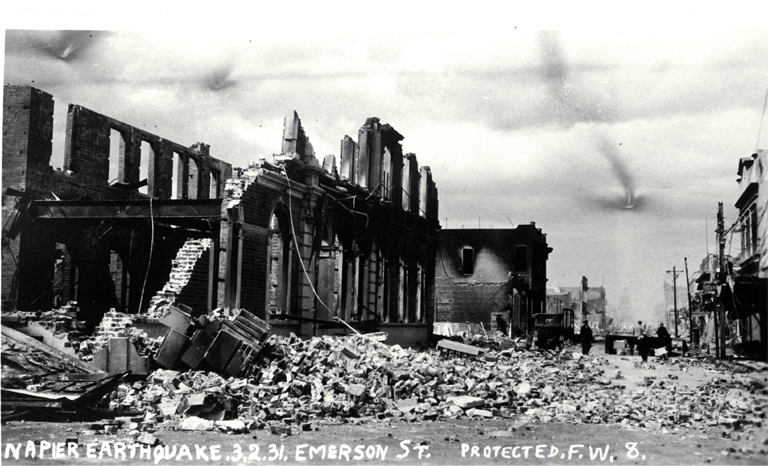
 happened in 1931 whose center is 15km north of Napier. The magnitude itself is less powerful than that of Wairarapa Earthquake, but casualties are much more than Wairarapa Earthquake. Death toll includes 161 people in Napier, 93 in Hastings, and two in Wairoa. Thousands more were injured, with over 400 hospitalised Napier and Hastings were devastated with this earthquake. The earthquake caused a dramatic landscape change around Napier. The most noticeable land change was the uplifting of the Ahuriri Lagoon. The lagoon was lifted more than 2.7 meters, which resulted in draining 2230 hectares of the lagoon. Currently there are farmland and the Hawkes Bay Airport around the area. After the earthquake, many buildings built during the 1930s and 1940s were heavily reinforced. Napier architecture is regarded today as one of the finest examples of Art Deco in New Zealand. Hastings was also rebuilt with many Art Deco and Spanish Mission style buildings.
Volcanic Eruption
The active volcanoes in New Zealand are all part of the Taupo Volcanic Zone, such as White Island, Tongariro, Ngauruhoe, and Ruapehu.
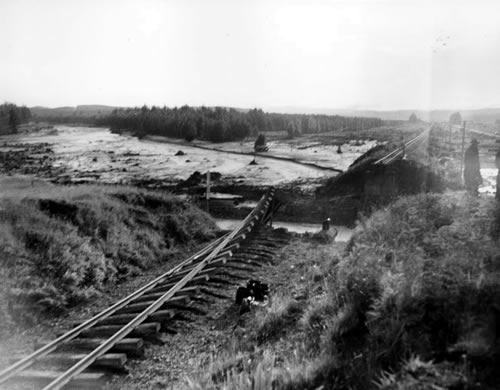
White Island is located in Bay of Plenty. This volcano is continuously active, and 70% of this volcano is under the water, which makes this is the largest volcano in New Zealand. Tongariro, Ngauruhoe, and Ruapehu are all located in Tongariro National Park. Tongariro’s volcanic activity is currently limited to geothermal features, such as warm ground, steam and gas emissions, and hot springs. Ngauruhoe erupted last in 1975. It takes about 3-4 hour walk from Mangatepopo carpark, but since this volcano is active, you should approach the crater carefully with experienced and equipped parties.Ruapehu caused the worst damage by lahars on December24th in 1953. At this time, the train bridge was destroyed, and the train fell from the bridge, caused 151people to death. Recently it erupted on September 25th in 2007, and three people were injured.
Eruption of
Mt. Tarawera in 1886 is very famous. This eruption killed over a hundred people. The volcano is surrounded by many lakes created or altered due to eruption in 1886, such as Lakes Tarawera, Rotomahana, Rerewhakaaitu, Okataina, Okareka, Tikitapu, and Rotokakahi.There used to be
Pink and White Terraces located on the edges of Rotomahana near Rotorua, but hot mud, red hot boulders and huge clouds of black ash caused by eruption of Mt. Tarawera passed through Lake Rotomahana, which completely destroyed and disappear Pink and White Terraces, and buried several villages of Maori and European. This place used to be considered a natural wonder until it disappeared, and also Pink and White Terraces attracted many tourists from Europe in the early 1880s although New Zealand was not so accessible at that time. They actually could bathe in the water of Pink and White Terraces.. Interestingly on May 31 in 1886,
a phantom war canoe whose outline was ghostly, appeared across the waters of Lake Tarawera in the morning mists. Strangely no one had such a canoe around the lake, and not only one witness saw that but also some other people saw the same canoe. Maori people thought that this was omen that something bad would happen. 11 days later, Tarawera erupted.
Tangiwai Railway Disaster
This event itself is not actually a natural disaster but caused by a natural disaster. On Christmas Eve in 1953, the train carrying 285 passengers crossed the bridge without knowing that the bridge was damaged due to
lahars from
Mt. Ruapehu and fell into the river, which led to 151 passenger's death. At that time, this tragic event was the 8th worst railway disaster in the world.
I mentioned horrible natural disasters happened in New Zealand's history, but don't worry! These disasters are pretty rare! As I said in the opening, New Zealand is really famous for its nature and nice to stay. Why don't you visit New Zealand sometime?
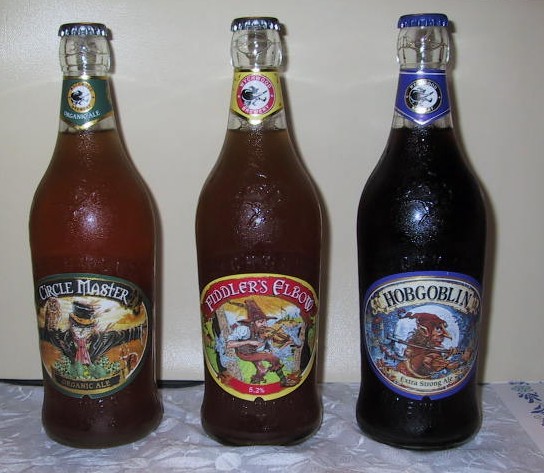 What drink do you think is the most popular in Britain? Tea? Yes, but actually beer has longer history than tea and have been loved by many British people. It is said that beer and wine are the oldest alcohol and have already made in Mesopotamia civilization; however, they cannot make much wine in Britain due to climate condition; therefore, beer became very popular. After Middle Age, they even brewed beer in a monaster. People in Middle Age would often drink beer with bread to get nutrition out of beer. Cider, made by fermented apple, is also a famous alcohol beverage. Especially teenagers like to drink this because this taste is really sweet and easy to drink, but you have to be careful that this is still alcohol and not to drink too much.